

In his address, Seyed Javad Hosseini, President of the State Welfare Organization, emphasized that Iran has passed the stage of a youthful population based on demographic indicators and is now at the beginning of the path toward an aging society. “The data show that Iran’s pace toward aging is extremely rapid, and by 2051 (1430 solar year), we will face a highly aged society,” he stated.
Hosseini highlighted the multifaceted nature of aging, noting that it is not merely a biological or medical issue but is accompanied by various layers including disability, loneliness, poverty, disease burden, and the feminization of aging. “Currently, 76,000 elderly women are heads of households, and 238,453 elderly people with disabilities are covered by the Welfare Organization. Additionally, 68 percent of the elderly under our coverage belong to the first to third income deciles and are struggling with poverty,” he added.
Pointing out that aging is often accompanied by disability, Hosseini said studies show the highest level of disability among the elderly relates to mobility impairments, followed by vision, intellectual/mental, and hearing impairments.
Behzisti’s Services and Programs in the Field of Elderly Care
Hosseini outlined the organization’s key initiatives, stating that one of the most important programs is the Community-Based Rehabilitation (CBR) scheme, which encompasses health services, education, social services, and empowerment for the elderly. This program has so far covered 95 percent of rural areas, with plans to extend to 30 percent of urban areas this year.
He continued: “Programs for raising awareness and preventing disability in old age, home-based rehabilitation, home care services, livelihood subsidies for severely and moderately disabled elderly without income, payment of caregiving allowances, and educational services for formal and informal caregivers are among the actions taken by the Welfare Organization in this area.”
Regarding the growth in financial support, Hosseini announced that caregiving allowances have increased by 90 percent this year, and home visit services by 100 percent, with payments beginning today.
“The Welfare Organization currently oversees 500 educational, rehabilitation, and care centers dedicated to the elderly out of its total 3,500 supervised centers. It also provides rehabilitation medicine services, assistive devices, prosthetic limbs, hygiene supplies, self-care education, and empowerment programs for older adults,” he explained.
Hosseini added that 200,000 elderly individuals have benefited from specialized training and content under the Behzist Neighborhood program. This year, more than 300 elderly centers have been standardized, and the organization is seriously considering the establishment of modern elderly service centers, including elderly villages and social health towns for seniors.
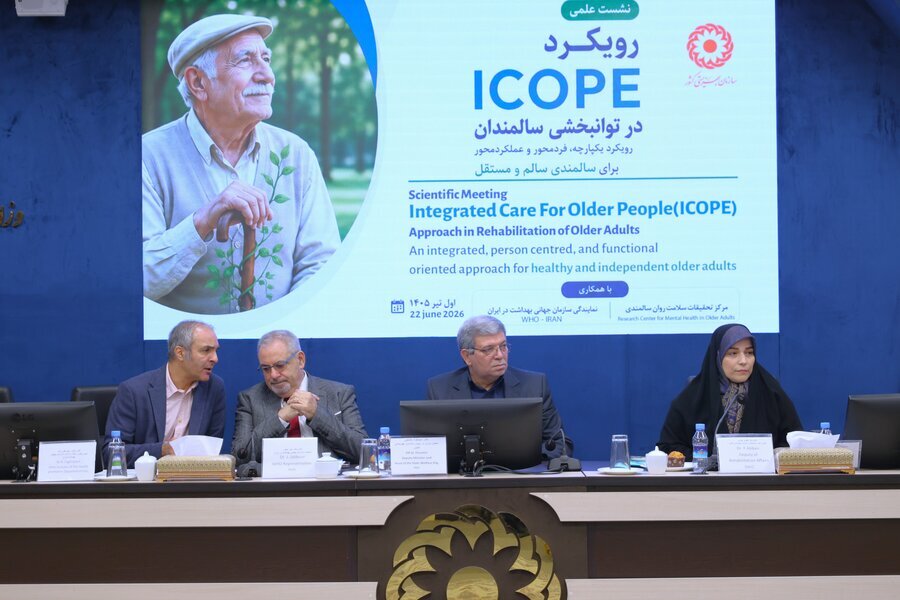
The session underscored collaborative efforts between Behzisti, the Ministry of Health, and the World Health Organization to implement the ICOPE framework and better prepare Iran for the challenges of rapid population aging.
Your Comment